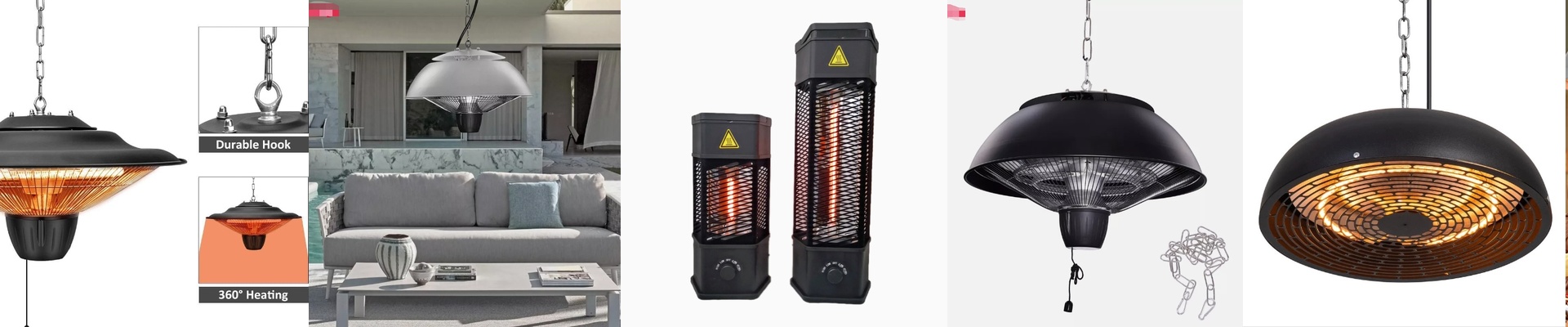
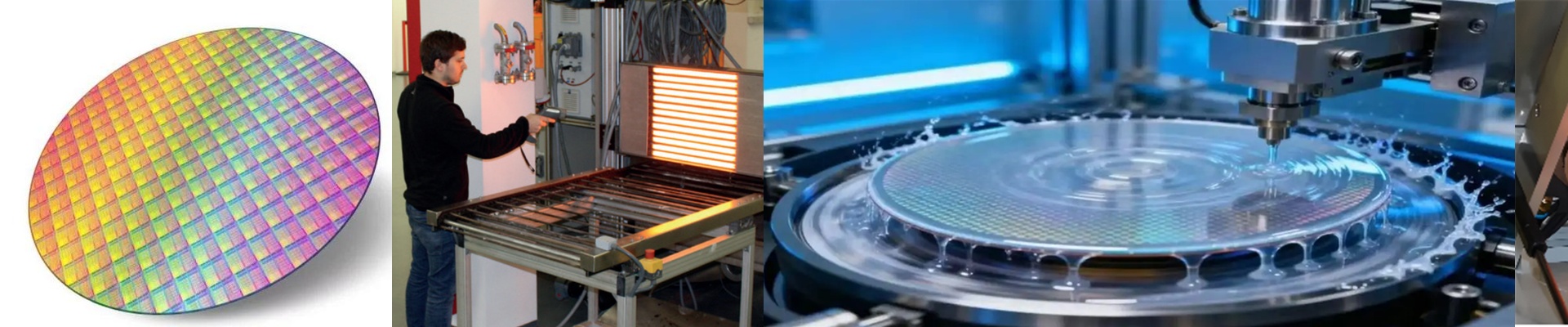
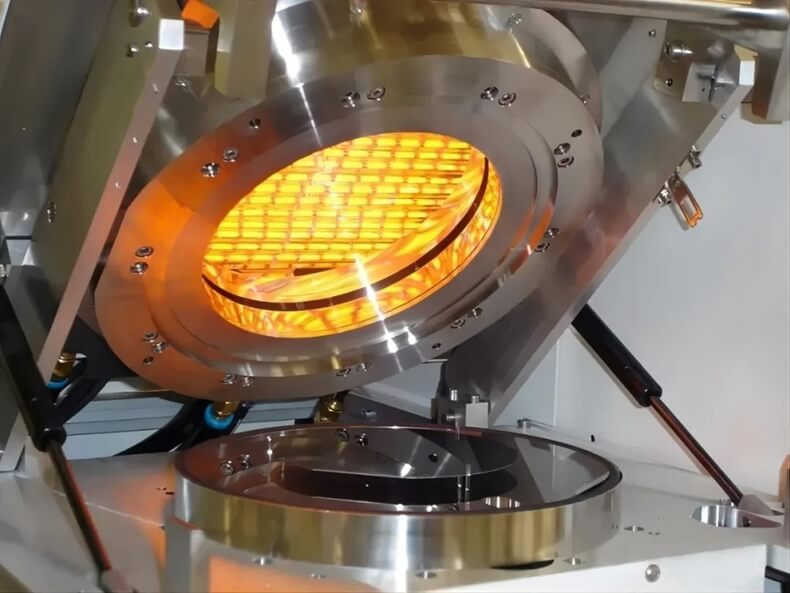
On the line, temperature isn’t a suggestion—it’s a spec. A 1°C drift during photoresist soft bake, or a 2°C hot spot across the wafer during cure, will quietly eat your overlay margin and etch selectivity. In sputtering and the supporting thermal steps, the heater doesn’t just add heat. It sets the thermal budget the process has to live inside, day after day. We built our semiconductor sputtering heater around infrared because wafer heating is really about controlling energy transfer, not chasing wattage. Infrared gives you direct, line-of-sight heat with fast response and steady steady-state behavior—exactly what you need when the recipe demands tight thermal uniformity and repeatable bake profiles.
What actually matters, technically
In sputtering environments, the heater has to satisfy two demands at once: precise temperature control at the wafer plane, and cleanroom behavior that doesn’t turn into a particle source.
- Wafer-plane uniformity: We target ±0.1°C across the wafer during the critical bake steps. That isn’t a marketing number—it’s the boundary that keeps linewidth variation and sidewall profile drift inside the control limits of lithography and etch.
- Temperature repeatability: Profile-to-profile repeatability is specified to support statistical process control. When the same thermal profile comes back within tight tolerances, setup time drops and rework stays off the board.
- Fast, stable response: Infrared heats up quickly and settles fast. That cuts idle time between loads and shortens the window the chamber spends in a non-process state.
- Cleanroom compatibility: The system is engineered for Class 1–100 cleanroom integration. Materials and finishes are chosen to minimize outgassing and reduce particle generation. In practice, that means lower particle counts during sustained operation and fewer contamination-related alarms.
- Zero particle generation focus: We design to avoid hot spots and thermal stress points that can drive decomposition or flaking. The goal is consistent performance without turning the heater into a maintenance-driven particle contributor.
- Reliability under continuous operation: Semiconductor tools run 24/7. The heater is specified for long-duration stability with minimal unplanned downtime. Maintenance becomes planned, not reactive. Infrared works here because it decouples heat delivery from mechanical contact. You avoid the thermal lag that comes with heavy blocks and the variability introduced by contact resistance. The result is a thermal system that tracks setpoints with fewer overshoots and less drift.
Why this fits sputtering lines
Sputtering lines can’t treat heating like a generic utility. The thermal steps feeding sputtering—wafer drying, photoresist pre-bake (soft bake), and curing (hard bake)—are process-critical. When heating underperforms, you see real failures.
- Wafer drying and cleaning: Residual moisture will kill lithography. Incomplete drying can cause adhesion loss and introduce defects that show up later as yield loss. Infrared delivers rapid, uniform energy to drive off moisture without overheating surfaces. That keeps surface chemistry stable and reduces the risk of skin formation that traps contaminants.
- Photoresist soft bake: Soft bake controls solvent removal and sets the initial film stress. Too cool, and the resist stays under-dried; too hot, and the resist flows or shifts sensitivity. The heater’s tight uniformity and repeatable profiles keep the resist inside the designed thermal window. In production, that translates into fewer rework lots and more stable critical dimension control.
- Curing and hard bake: After patterning, curing stabilizes the film and prepares it for the next steps. Non-uniform heating creates gradients in crosslink density, which can drive etch rate non-uniformity and compromise pattern integrity. Infrared heating gives consistent energy across the wafer, so the cure profile is the same lot to lot. Inside the sputter step itself, substrate temperature at deposition affects film stress, grain structure, and interface quality. A heater that holds temperature steady reduces run-to-run variability. You get more predictable sheet resistance, more consistent step coverage, and fewer excursions tied to thermal drift. The operational gains show up where it counts:
- Stable cycle time: Fast settling and predictable profiles shorten non-value time without bending the spec.
- Lower scrap and rework: Tighter thermal control cuts defects linked to moisture, under-bake, and over-bake.
- Energy use discipline: Infrared heats the target directly, with less wasted energy on large mechanical masses. Over time, that lowers energy per wafer.
- Fewer maintenance interruptions: Cleanroom-compatible design and robust thermal architecture reduce particle-related alarms and unplanned service.
The details that make it work
No thermal system installs itself. You have to match the heater to the tool and the process constraints.
- Integration geometry: Infrared heaters need clear line-of-sight and the right standoff from the wafer. The tool’s chamber layout, robot motion envelope, and shielding have to account for that. Plan mounting and clearances early, before the line is locked down.
- Emissivity and reflectivity: Wafer backsides, carriers, and shields vary in emissivity. Reflective surfaces can create non-uniformity. We typically recommend validating the thermal profile with instrumented wafers in the actual chamber configuration, then locking that setup in the recipe.
- Utilities and cooling: Even with efficient delivery, infrared systems still need the right electrical provisioning and cooling. Confirm voltage, amperage, and coolant flow at the point of install so you don’t run into thermal throttling during sustained runs.
- Cleanroom housekeeping: The heater is cleanroom-compatible, but the surrounding environment still matters. Airflow patterns, solvent vapor levels, and particulate loading affect long-term particle performance. Keep the local environment disciplined. If your process runs on tight thermal budgets—soft bake, hard bake, curing, and sputtering all in one continuous flow—temperature control isn’t an accessory. It is the process. Our semiconductor sputtering heater is engineered to hold the line where it counts: on the wafer, in the chamber, under schedule pressure.